Claude has taken a drastic step towards strict real-name verification, where users must submit identification documents and selfies, significantly increasing the risk of account suspension.
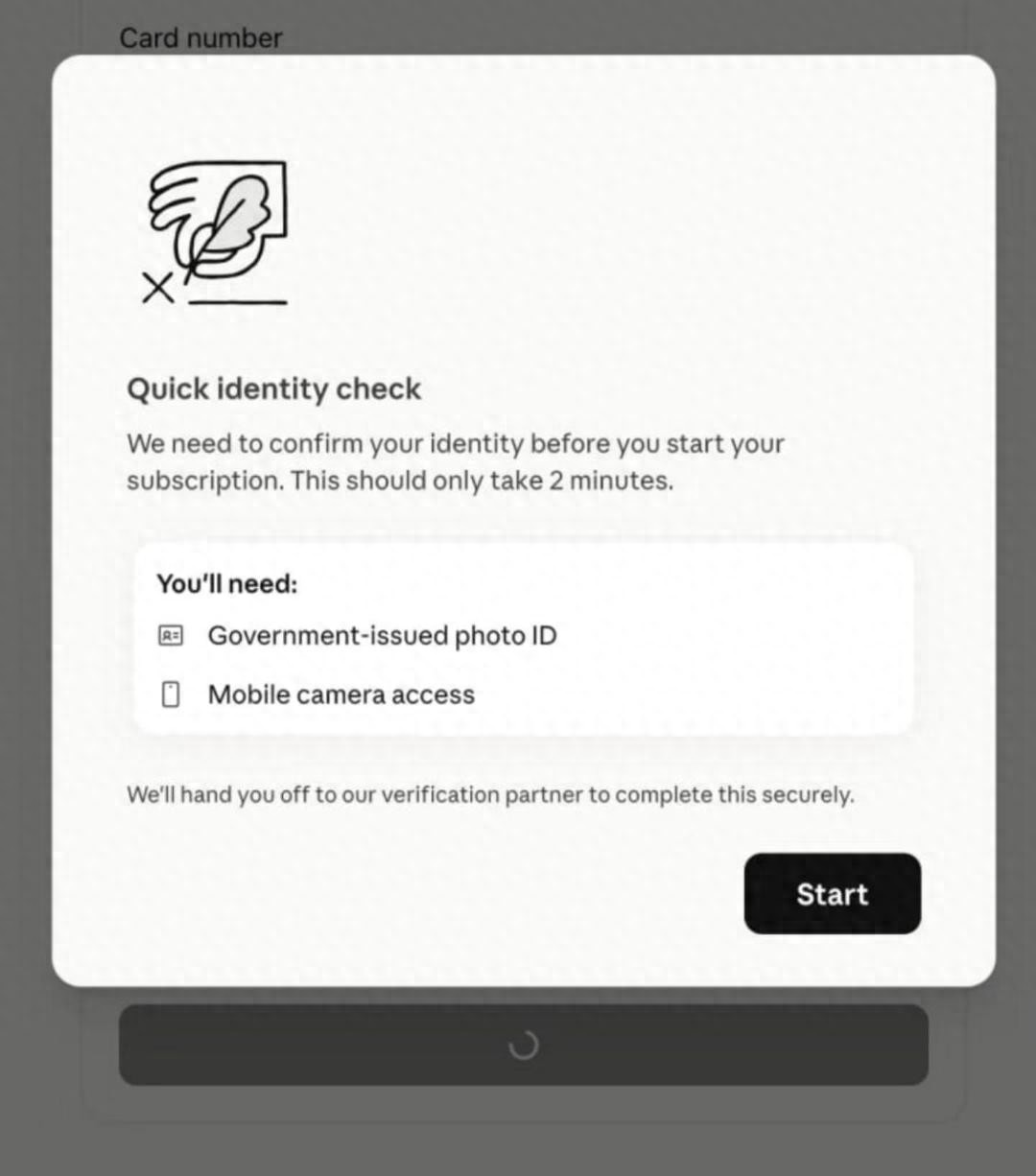
Many users previously held onto a glimmer of hope that the platform would leave some leeway. Now, it’s clear that Anthropic has closed off any such gaps.
The most alarming aspect for users is not just the cumbersome process that may take a few extra minutes, but the fact that account risks have shifted from a vague state to a clearly defined one. The platform has laid bare its verification, review, and enforcement processes.
In short, there’s no more pretense!
Official Announcement Explained
Targeting ‘High-Risk Users’
Anthropic’s official announcement appears calm and compliant, discussing preventing abuse, enforcing usage policies, and fulfilling legal obligations without any glaring issues.
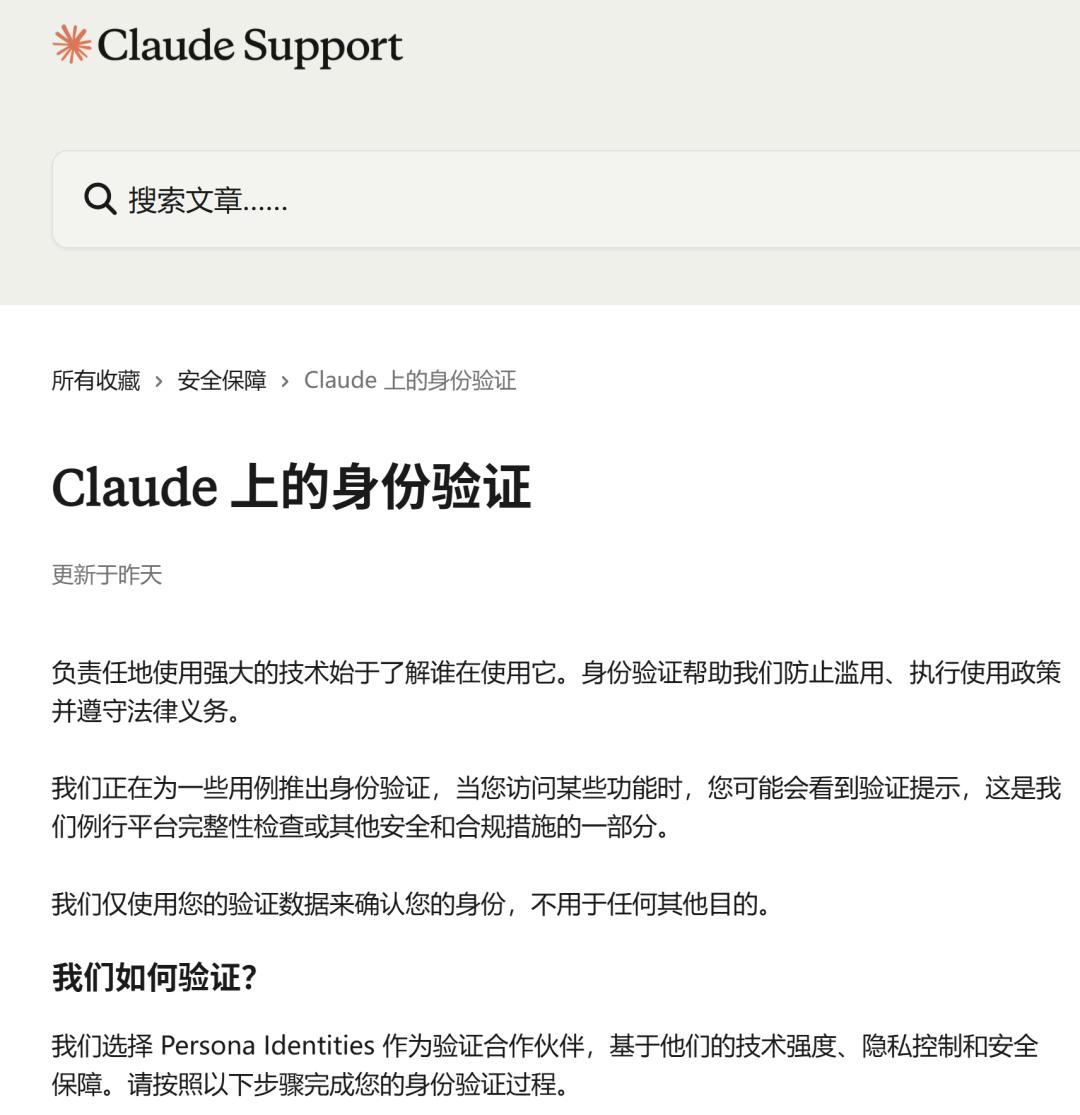
However, what users see is the platform’s significant leap forward in identity verification capabilities.
The announcement clearly states that certain use cases, specific features, platform integrity checks, and other security and compliance measures may trigger identity verification.
The required materials for verification are also explicitly stated: a government-issued photo ID and a live selfie, both must be physical originals. Screenshots, scanned copies, photographs of documents, and digital IDs are not acceptable.
This stringent requirement has left many feeling disheartened.
Even more concerning, Anthropic has stated that accounts can still be disabled even after verification. Reasons include repeated violations of usage policies, creating accounts from unsupported locations, violating terms of service, and being under 18 years old.
This statement carries significant weight! It indicates that the platform is not satisfied with merely identifying whether a user is a real person; it seeks stronger confirmation capabilities, more efficient review processes, and direct enforcement abilities.
Moreover, the boundaries are intentionally vague. What constitutes certain use cases, specific features, or other security and compliance measures? The criteria for triggering verification can change daily, leaving users with no certainty.
This uncertainty is what frustrates users the most! With the platform now equipped with stronger identification tools, the risk of account suspension has escalated. The metaphorical knife is now pressed against the face!
The Introduction of Persona
Things Have Changed Completely
Many users might initially perceive Persona as just another easy-to-bypass identity verification service. However, that would be an oversimplification.
Persona’s role goes far beyond merely creating a webpage, collecting a photo, and following a process. It provides a comprehensive identity verification infrastructure, ensuring that “who you are,” “whether it’s really you,” “whether you should be allowed access,” and “whether you can be held accountable” are all interconnected.
Once such companies are integrated, the implications are entirely different. Persona has collaborated with other leading organizations, including major model companies like OpenAI. It has experience handling high-intensity identity checks and serving high-risk, high-compliance business scenarios.
By choosing Persona, Anthropic sends a clear signal: Claude is not just implementing a temporary verification process or a small-scale trial; it is establishing a mature, scalable, and executable gatekeeping system!
This is why many users are suddenly on edge. In the past, many aspects could survive in the cracks, where identification actions were costly, execution was cumbersome, and systems were not as robust.
Now, with a mature infrastructure in place, those previously ambiguous processes that could be delayed or navigated through loopholes will gradually be eliminated!
Let’s talk about KYC.
This term was previously more associated with finance, payment, and trading platforms. Many believed it was a game for banks and exchanges, far removed from AI products. Now, Claude has directly ventured into this territory.
KYC essentially means confirming your identity before discussing what you can do and deciding how to handle issues that arise.
This is why there is such widespread anger. Claude once felt like a model platform, a tool platform, a productivity platform. Now, with the introduction of identity verification, the platform’s logic has clearly shifted.
It is increasingly concerned about who you are, how you use the platform, and whether you meet its definitions of safety and compliance!
For users, this change is perilous! Once this step is taken, future tightening will only become more seamless.
User Reactions Reveal the Anger
Comments Reflect User Frustration
Comments from users express their emotions clearly. Some are outright angry:
Anthropic is no longer treating us like humans; we need to provide passports and selfies to use certain features.
Users fear that after submitting their materials, the risks will not decrease but rather increase! The platform will have more complete information, leading to harsher risk control, identification, and enforcement.
This is essentially bad news for users in unsupported regions. The verification is likely to fail, and even if successful, the risk of account suspension remains due to various reasons.
Many previously silent users now realize that Claude has never truly provided stable expectations. With the narrowing of any remaining ambiguity, who wouldn’t be outraged?
Another comment from six months ago predicted:
Just implement KYC already.
And now, it has indeed been implemented.
The frustration is not just about the platform tightening its policies. It is also about Anthropic’s long-standing, inconsistent, and anxiety-inducing attitude towards users, which has built up over time. The launch of identity verification has ignited this frustration!
Some users realistically assess that only government-issued IDs from supported countries and regions will be accepted, leading to potential issues for many intermediaries.
This is not an exaggeration. Many services in the ecosystem are built on fragile foundations. With the implementation of real-name verification, many services that previously thrived in loopholes will face severe consequences!
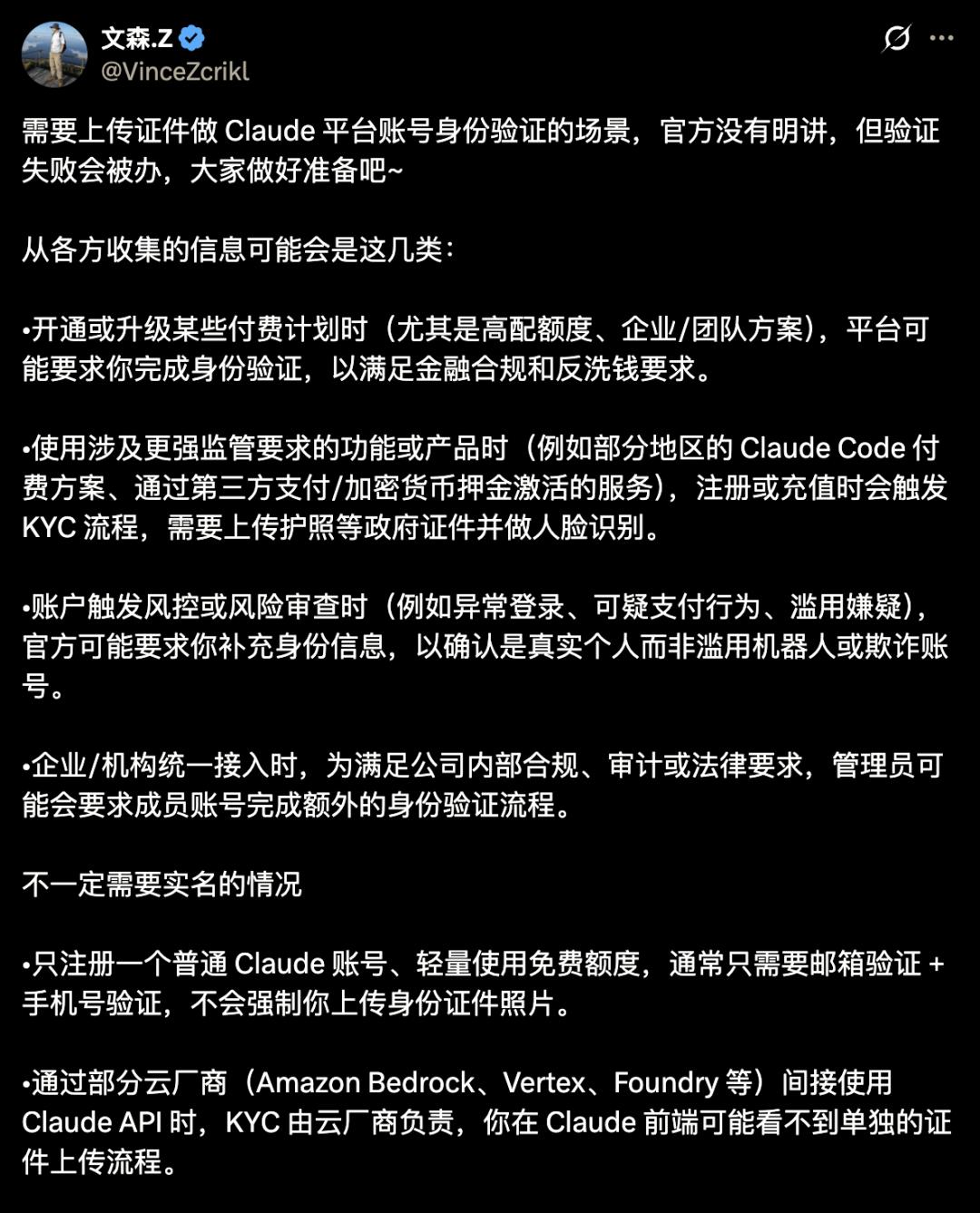
Another brief comment reads:
Max is in danger.
These four words carry significant weight. The users most concerned are those who are high-intensity, high-amount users who rely on Claude as a core productivity tool. The deeper they engage, the more they invest, the more they fear the platform suddenly implementing real-name verification and disrupting their entire workflow!
Some users remark:
Continuously sending clients to competitors; Opus 4.6 has been problematic, and now Codex seems more appealing.
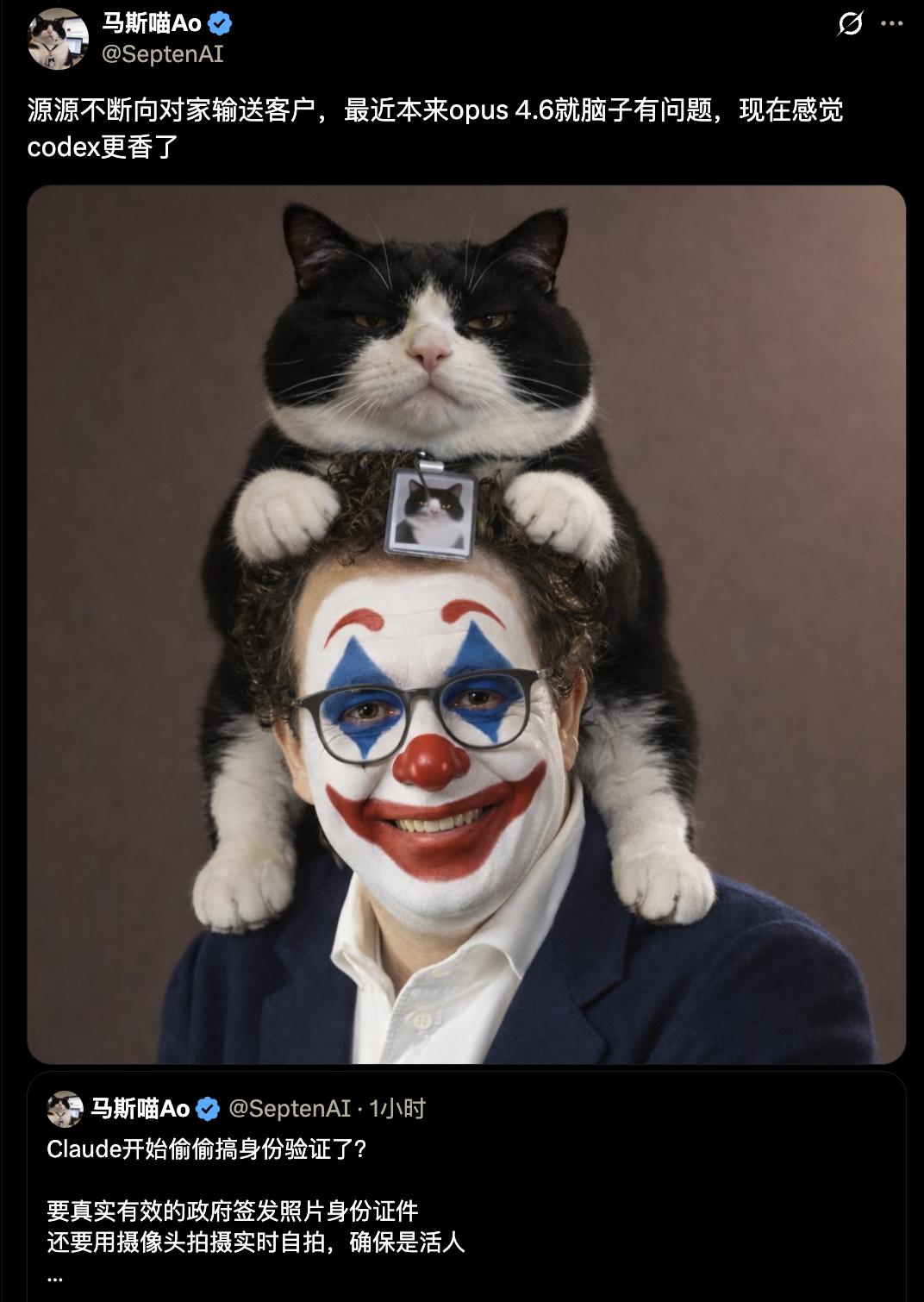
As the platform increases pressure, lowers user experience, and raises concerns about account security, why do users still cling on?
Voting with their feet has always been the quickest response!
Don’t Wait for the Sword of Damocles to Fall
Take Action to Mitigate Risks!
Continuing to ignore the situation and tying your entire workflow, client projects, and core data to a single Claude account is extremely risky!
To reduce the risk of suspension, Anthropic’s help center has made it clear that the Free, Pro, Max, Team, and Enterprise subscription plans are intended for Claude’s native applications and normal usage scenarios. You are purchasing the right to use official products, not a universal traffic pool or an interface for external distribution or integration with various third-party projects!
If you need to connect third-party software, open-source projects, or services, the official path is also clearly stated: use API keys, access the Claude Console, or utilize supported cloud platforms.
This is particularly critical, and many must pay close attention!
Because the highest risk comes from treating personal subscriptions as universal interfaces.
Do not use personal Claude subscriptions for reverse proxies, avoid shared pools, do not engage in sub2api, do not run for multiple users, and do not run for clients.
Especially do not use Claude subscription packages to reverse proxy for projects like OpenClaw or Hermes Agent!
These practices are now high-risk areas! Anthropic’s stance is clear: disguising identity and routing third-party traffic through subscription quotas violates terms and policies and may lead to enforcement actions.
The most alarming point for many is this!
It’s time to abandon any sense of luck. Just because nothing has happened in the past does not mean nothing will happen in the future. Now that the platform has pushed identity verification and risk control forward, many previously acceptable actions will become precise targets for enforcement!
Now, let’s talk about reducing potential losses from suspension.
This action should not be delayed—do it immediately! Export all data from Claude!
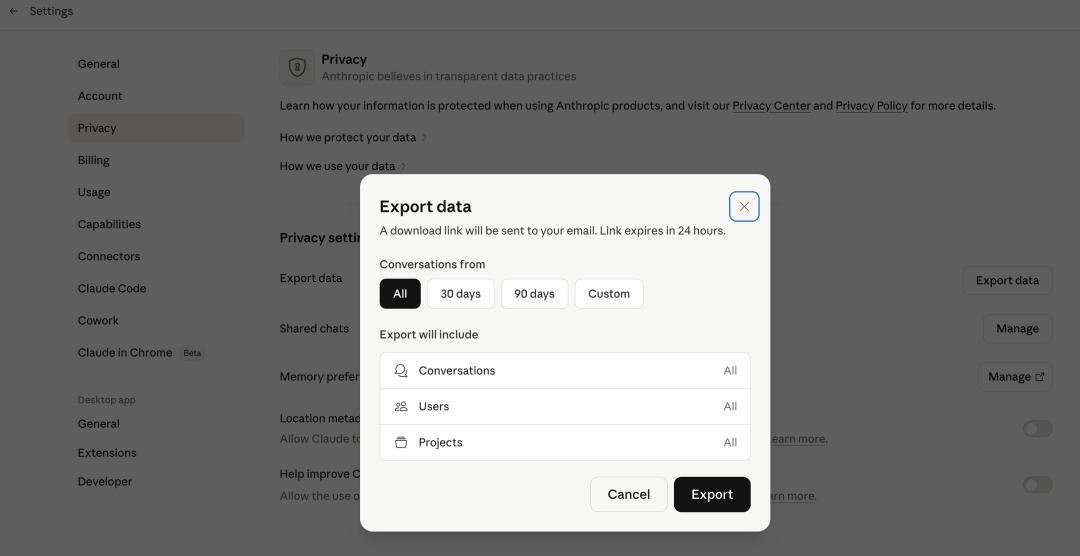
Backup important items such as conversation records, prompts, project contexts, and client communication content. Anything significant should be preserved!
Many people often overlook this issue, thinking that as long as the account exists, the data will be safe. When an account is suspended, the most painful loss is not just the subscription fee but the complete erasure of all historical context and the abrupt disruption of workflows!
That is the real loss that can cause a breakdown!
Reconsider ChatGPT
Ultimately, users need tools that work effectively, not ones that require constant anxiety over platform whims. The more stable, clear, and reliable a business logic is, the more it deserves to host core workflows.
OpenAI at least embodies a sense of realism. Ultraman is a realist and a businessman.
He engages in profitable markets, serves viable users, and presents a clear commercial logic: profits are profits, products are products, without unnecessary theatrics!
This is crucial for users. They seek stable delivery, long-term usability, clear rules, and peace of mind after spending money without worrying about sudden disruptions!
Looking at the models themselves, Claude’s recent reputation fluctuations are evident. The controversies over reduced intelligence are growing, and Opus 4.6 has faced criticism, causing many to lose confidence in various scenarios.
In contrast, GPT-5.4 Pro is increasingly seen as the more stable, powerful option with a lower hallucination rate.
When it comes to practical work, handling complex tasks, and serving as a long-term mainstay, it is becoming more appealing!
This is also where Anthropic has made a significant misstep. While implementing real-name verification and raising user anxiety, the model experience continues to suffer in reputation.
As a result, users shifting back to ChatGPT seems almost inevitable!
Many will likely reposition ChatGPT as their primary tool, which is entirely reasonable.
Every cut made by Claude may ultimately harm its market share, “lifting a stone only to drop it on its own foot!
Appendix: Full Chinese Announcement from Claude
“Identity Verification on Claude”
Responsible use of powerful technology begins with understanding who is using it. Identity verification helps us prevent abuse, enforce usage policies, and comply with legal obligations.
We are rolling out identity verification for certain use cases, and you may see verification prompts when accessing certain features, which is part of our routine platform integrity checks or other security and compliance measures.
We only use your verification data to confirm your identity and not for any other purpose.
How do we verify?
We have chosen Persona Identities as our verification partner due to their technological strength, privacy controls, and security assurances. Please prepare the following items to complete your identity verification process.
What you need to prepare
Before you begin, please have the following items ready:
A valid government-issued photo ID: a physical document at hand.
A smartphone or computer with a camera: you may need to take a live selfie with your phone or use a webcam.
A few minutes of time: verification usually takes less than five minutes.
Accepted types of identification
We accept original, physical government-issued photo IDs from most countries. Common examples include:
Passports Driver’s licenses or state/provincial IDs National IDs
Your identification must be government-issued, clearly legible, intact, and include your photo.
We do not accept:
Copies, screenshots, scanned documents, or photos of documents. Digital or mobile IDs (such as mobile driver’s licenses). Non-government IDs: student IDs, employee IDs, library cards, bank cards. Temporary paper IDs.
How is your data protected?
We understand that submitting identification documents is a significant request, and we have designed this process to protect your information at every step.
Anthropic is the data controller of your verification data. This means we set the rules for how data is used and retained. Persona processes the data on our behalf, following our instructions.
Your ID and selfie are collected and stored by Persona, not on Anthropic’s systems. Anthropic can access verification records through Persona’s platform when necessary—such as reviewing appeals—but we do not copy or store these images ourselves.
Persona is contractually restricted in how they use your data: only to provide and support verification and improve their fraud prevention capabilities. They must use industry-standard security controls to protect the data and delete it according to our established retention periods and applicable laws.
All data transmitted to Persona is encrypted both in transit and at rest.
For complete details on how we handle personal data, please refer to our privacy policy.
What we are not doing
We do not use your identity data to train our models. Verification data is only used to confirm your identity and meet our legal and security obligations.
We do not collect more information than we need. We only ask for the minimum information required to verify your identity.
We do not share your identity data with anyone. Verification data is retained only between you, Persona, and Anthropic, unless we are legally required to respond to valid legal processes. Your verification data will never be shared with third parties for marketing, advertising, or any purposes unrelated to verification and compliance.
What if my verification fails?
Verification may fail for various reasons: blurry photos, unclear documents, expired IDs, or technical issues.
If your verification is unsuccessful:
Comments
Discussion is powered by Giscus (GitHub Discussions). Add
repo,repoID,category, andcategoryIDunder[params.comments.giscus]inhugo.tomlusing the values from the Giscus setup tool.